We don’t carry ethics around like a list. We carry scenes, pulses, aches. A hand not taken. A bill slipped back to the cashier. The body remembers. Then the brain compresses those experiences into workable rules—habits more than commandments. That blend of event memory and value, the way experience hardens into a sense of “ought,” is moral memory. It isn’t a single place or circuit. It’s a slow negotiation between feeling, prediction, story, sleep. Biology has its pace, hours to days to years, and culture extends that pace across generations. If you think of reality less like material blocks and more like information—pattern, relation, constraint—then ethics becomes a kind of memory architecture. Not data points. Shapes that steer action.
Circuits of Conscience: How Brains Encode Moral Experience
Start with the unromantic machinery. The hippocampus bookmarks what happened—who, where, when—so that you can find it later. The ventromedial prefrontal cortex (vmPFC) and orbitofrontal cortex (OFC) learn the “prices” of actions in context, mapping situations to likely outcomes. The amygdala tags intensity—harm, threat, tenderness—so certain moments punch through the noise. The insula keeps a pulse on the interior: nausea at disgust, the warm drop of relief when you make something right. Temporoparietal junction (TPJ) reads other minds enough to track intention. Posterior cingulate cortex stitches scenes into a me-and-my-people narrative. None of these regions is “morality,” yet the braid gives you a felt sense that lying to a friend lands differently than lying to a bot. It’s neuroscience at its most ordinary: prediction tuned by experience.
Learning here is not lectures. It’s prediction error. Dopamine signals tell the system when outcomes differ from expectation: you returned the wallet and the stranger cried; unexpected relief, a reweighting. Noradrenaline marks urgency; serotonin reshapes patience and punishment sensitivity; oxytocin adjusts trust maps (but only in-group, inconveniently). Habits seed in basal ganglia, so restitution practiced often enough becomes default, not deliberation. Value isn’t added to memory after the fact—it’s entwined at storage and retrieval. Sleep helps. During slow-wave sleep, hippocampal “replay” nudges vmPFC toward general rules (helping a classmate, then a stranger, then a rival—over nights it becomes “I don’t take advantage when someone’s exposed”). REM sleep seems to integrate the heat, softening edges so painful scenes can instruct without flooding.
Event boundaries matter. You learn more when a line is drawn—“that was wrong, stop, now repair.” The interruption itself creates a chunk in memory, a unit that can be rehearsed and transformed. Reconsolidation—the fragile window when recalling a memory renders it editable—lets us moral memory in real time. Think of a medic who made a split-second triage choice that cost a life. Later, in a safe room, retelling the story with a mentor shifts blame from self to circumstance, adds context, builds a reachable next-time script. Not erasure. Update. Moral injury sits where this fails: action and value unintegrated, the event repeating without a path to repair. Therapy that times the story to reconsolidation windows, that introduces new actions (apology letters, memorial acts), isn’t “bonus empathy.” It’s literal memory surgery with words and witness.
Example from daily life: a child watches a parent drive back to the store to return extra change. The hippocampus logs details—the fluorescent light, the walk of shame to the register. The amygdala marks the mild fear. The vmPFC notes the outcome: the clerk’s surprised grin, the parent’s relaxed shoulders. Tell that child “honesty is good” and it might stick. But the scene, replayed over dinners and during sleep, becomes a template. Next time the choice appears, the body already leans. That’s the quiet grammar of neuroscience shaping ethics: memory first, principle later.
Inherited Rules: Culture as Externalized Moral Memory
One brain can’t carry a civilization’s ethics. So we offload. Rituals, laws, stories, songs, reputational systems—external scaffolds that act like long-term memory for a group. You don’t need to compute harm from first principles every time; the calendar says Sabbath, the doors close, the town quiets. A behavioral constraint that trains patience and rest. Proverbs and case law do the same, compressing many lives of trial-and-error into portable rules. Religions, at their best and worst, function as moral memory institutions. They stabilize cooperation packages (don’t cheat, share with kin and stranger, punish defectors, forgive sometimes) across centuries, with music and architecture to keep the packets sticky. Not nostalgia. Durable compression of hard-earned strategies.
This is where information-as-substrate helps. Culture stores not neutral “content,” but constraints. One-way streets, fines for dumping, the layout of a public square—moral memory poured into asphalt. A truth and reconciliation commission is a memory device: it turns private harm into public record, lets communities index wrongs and attach repair practices that future generations can look up. Rwanda’s gacaca courts did this locally, faster, rougher than Western forms. The point isn’t perfection; it’s to build a shared retrieval system so the next crisis has a shelf to reach toward. Festivals, fasts, and feasts are time-based encodings (scarcity rehearsed before the famine). Even small table rituals—blessing bread, naming the hands that farmed and baked—train gratitude, which reduces zero-sum reflexes. Culture makes the ethical choice easier to recall because it’s visible, audible, scheduled.
None of this absolves the mess. External memory can go toxic. Propaganda loops reweight salience so fear dominates, and then fear writes policy. Corporate “values” posters launder incentives; the real memory sits in who gets promoted after cutting corners. Still, if we want to understand how groups maintain a compass, we watch the rehearsal spaces, not just the rulebooks. Choir practice teaches attunement; so do neighborhood clean-ups and open ledgers. Online, reputation systems are proto-rituals. Badly tuned ones inflate outrage because outrage is easy to remember. Better systems create friction before re-sharing moral heat and offer structured repair (edit windows, public apologies that aren’t performances).
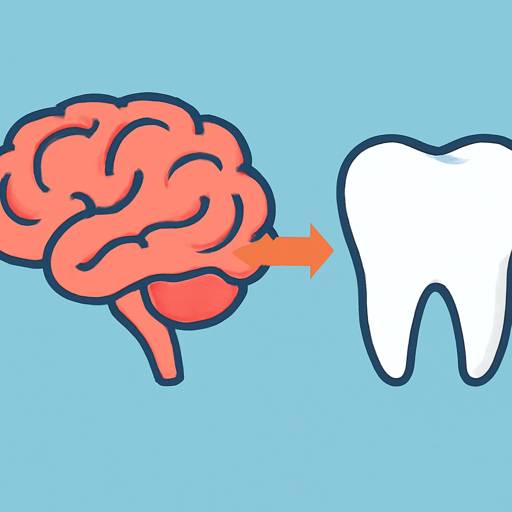
This is also what researchers mean when they link neuroscience and Moral memory: the biological circuits and the cultural scaffolds co-produce the thing we call conscience. Brains set the learning rate; institutions pick the curriculum and supply the cues. When the two sync—say, a community meal after conflict where stories are told, tears witnessed, sleep follows—the update sticks. When they fight—24/7 feeds, no pause, incentives to dunk—moral memories skew toward the spectacular rather than the useful.
Fast Machines, Slow Morals: Designing Technology Around Human Memory
We built networks that move faster than our consolidation windows. Then we act shocked when ethical judgment warps. The business model loves arousal; noradrenaline sells. “Governance” arrives as patches: banned terms lists, post hoc audits, PR mea culpas. In neural terms, it’s like dosing the amygdala and calling it a moral education. The risk is obvious: platforms and AI systems trained on click-traces learn salience, not moral memory. They mirror what we rehearsed most, which under current incentives is rage and novelty. If the self is a temporary compression of what we’ve paid attention to, then capture attention and you capture the compression—our felt sense of right constrained by someone else’s A/B tests.
What would technology that honors human learning rates look like? Simple moves. Insert sleep into the loop. A “next-day send” default for posts flagged high-heat by your own heart rate or language model cues. A visible “I changed my mind” affordance that culture rewards. Group deliberation features with actual turn-taking, not performative threads; audio spaces designed around listening time rather than reply time. Reputation systems that weight repairs and kept promises over raw reach. For minors—whose prefrontal control and vmPFC valuation are still wiring—hard caps on algorithmic curation, default mentorship channels linked to local adults, friction for copycatting risky trends. Design not to prevent all harm, but to give the hippocampus scenes worth replaying and the vmPFC regular, sober updates.
Clinical and civic examples point the way. Hospitals that hold Schwartz Rounds after adverse events reduce burnout and moral injury—shared narrative, witnessed grief, concrete next steps, then sleep. Veteran peer circles do similar work: testimony, acknowledgment, repair acts. These are social technologies that reshape memory without pharmacology. Where medicine does use drugs—propranolol dampening adrenergic punch during trauma recall—it raises a hard line: relieving paralyzing shame is care; erasing warranted guilt is not. The difference depends on whether the updated memory still points to responsibility and better action. Again: constraint, not amnesia.
AI complicates the picture. Models don’t have bodies; they don’t get cortisol spikes or slow-wave sleep. They optimize for objectives we write, and then they find shortcuts. We slap on “moral patches” (safety layers trained on curated dialogues) to quiet auditors. It works until it doesn’t. If we take seriously that durable ethics require slow, repeated, socially anchored rehearsal, then aligned AI needs more than filter stacks. It needs training that includes long-horizon feedback from communities who live with its outputs; public logs where harms are converted into test cases; open science so incentives can be inspected. Not anti-technology. Anti incentive-captured technology that confuses engagement with learning.
There’s a quieter frontier too: small interface choices that plant better memories. After heated exchanges, an app can prompt for local, offline action: call a neighbor, write to the school board, donate to a mutual aid fund. Put the body back in. The hippocampus loves place; ethics get real when tied to streets and names. Imagine an urban platform that overlays a map of repair: which alleys got cleaned after complaints, which promises met, which apologies acted on. Not points for virtue. A ledger of constraints met or missed, so future choices have a surface to grip. Ask a simple question when releasing any tool: will this make it easier for a person to store, retrieve, and update the right scenes?
I don’t think we get tidy answers. The brain’s moral memory is biased, local, prone to flattery. Culture’s memory can fossilize or be gamed. But between a hand returned to a cashier and a city that designs for repair sits enough room to work. The rest—how to teach machines to wait, how to make speed honor sleep—stays open, properly unresolved.

Kraków game-designer cycling across South America with a solar laptop. Mateusz reviews indie roguelikes, Incan trail myths, and ultra-light gear hacks. He samples every local hot sauce and hosts pixel-art workshops in village plazas.
Leave a Reply